
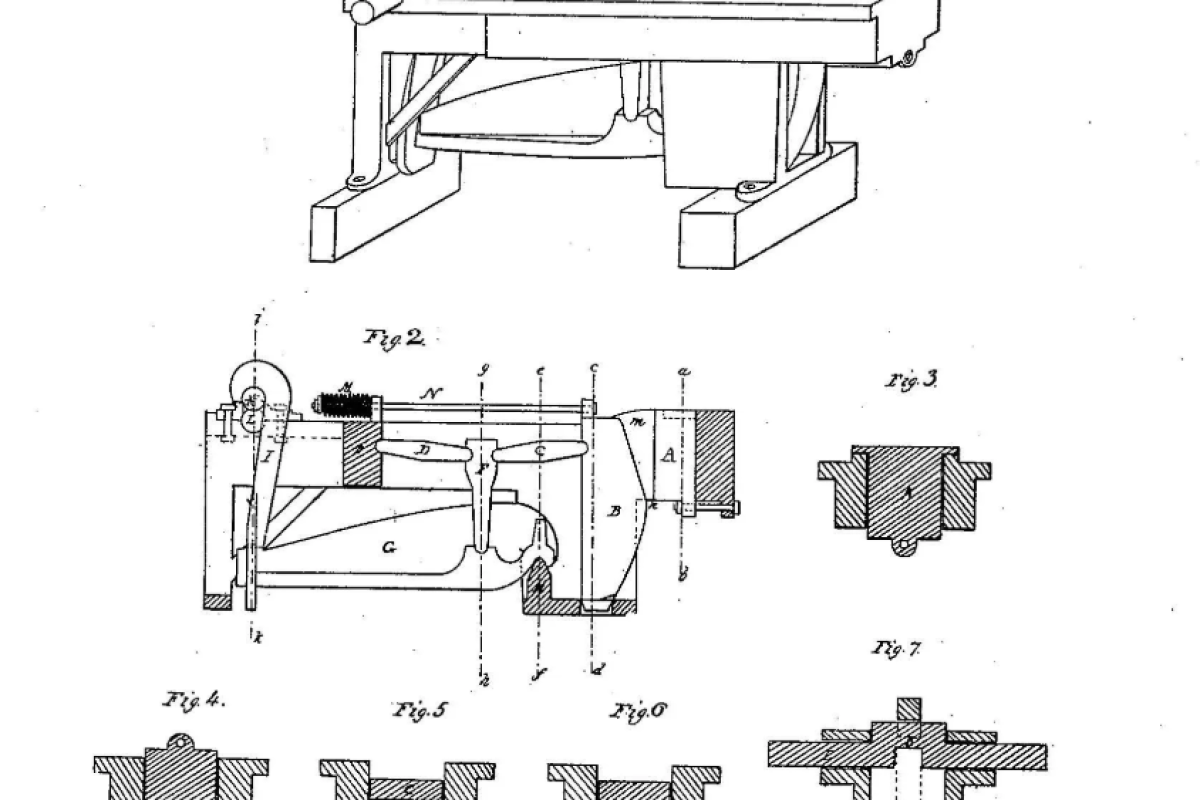
The Evolution of Jaw Crushers
In the mining, construction, and road-building industries, crushing machines form the backbone of modern infrastructure. Among these machines, jaw crushers stand out as one of the oldest and most reliable types of crushers still in use today.
The history of jaw crushers is not just the story of a machine — it is the story of the industrial revolution, engineering progress, and the evolution of global construction.
The First Step: Eli Whitney Blake and the 1858 Patent
The origins of jaw crushers trace back to 1858, when American inventor Eli Whitney Blake patented the world’s first jaw crusher.
- Known as the Blake Jaw Crusher, his design still serves as the foundation for modern models.
- It worked by compressing material between a fixed jaw and a moving jaw.
- Its first application was in quarries and road construction, revolutionizing the way stone was crushed in the U.S.
- Thanks to Blake’s invention, stone crushing shifted from manual labor with hammers to a much faster and more efficient process.
Early 20th Century: Industrial Adoption
With the industrial revolution in full swing, mining and construction projects expanded rapidly. This period marked the rise of jaw crushers on a larger, industrial scale.
- Transition from steam engines to diesel motors allowed jaw crushers to become more powerful and mobile.
- A range of models was developed, from small laboratory crushers to massive quarry crushers.
- Gold, copper, and coal mining operations increasingly relied on jaw crushers as essential equipment.
Mid-20th Century: Hydraulic Systems and Safety
By the 1950s, jaw crushers evolved with modern engineering solutions that made them safer, more durable, and easier to maintain:
- Hydraulic adjustment systems simplified jaw gap settings.
- Overload protection systems reduced the risk of mechanical failure.
- Wear-resistant jaw plates made from manganese and alloy steels extended machine life.
This era marked a turning point when reliability and operator safety became as important as crushing power.
Late 20th Century: The Mobile Revolution
By the 1980s, mobility and flexibility became central to the construction industry.
- The introduction of mobile crushing and screening plants changed the game.
- Jaw crushers were now available on crawler (tracked) and wheeled units.
- Mobility allowed equipment to be moved easily between sites, saving time and costs on large infrastructure projects.
- Their use expanded beyond quarrying into areas like construction waste recycling.
Today: Digitalization and Eco-Friendly Technology
Modern jaw crushers are not just powerful — they are also smart and sustainable.
- Automation and sensor technology provide real-time monitoring of wear, energy use, and efficiency.
- Remote control and IoT integration allow operators to manage machines via tablets or control centers.
- Electric and hybrid jaw crushers reduce carbon emissions and lower operating costs.
- Compact designs make them suitable for urban construction projects.
The Future: Where Are We Headed?
The evolution of jaw crushers is far from over. In the coming years, we can expect innovations such as:
- AI-powered predictive maintenance, preventing downtime before breakdowns occur.
- Fully electric crushers, supporting the zero-emission targets of the future.
- Lightweight yet durable materials, including titanium alloys and composites.
- Smart integration, where entire crushing and screening plants are managed from a single digital platform.
The Role of Jaw Crushers in Industry
Jaw crushers remain indispensable across key industries:
- Mining: Primary crushing of hard, abrasive rocks.
- Construction: Processing concrete, asphalt, and demolition waste.
- Infrastructure projects: Preparing raw materials for roads, railways, and dams.
- Recycling: Enabling the reuse of concrete and other building materials.
Mesco Global’s Contribution
The history of jaw crushers reflects engineering innovation from the industrial revolution to the digital age. From Blake’s 1858 design to today’s intelligent and eco-friendly crushers, this journey highlights the machine’s vital role in shaping modern infrastructure.
At Mesco Global, we carry this legacy forward by offering both stationary and mobile jaw crusher solutions. With options tailored to project capacity, power source, and mobility needs, we provide efficient, durable, and sustainable crushing solutions for industries worldwide.