Crushing machines used in the mining, construction, and road-building industries form the foundation of modern infrastructure. Among these machines, jaw crushers stand out as one of the oldest and most reliable types of crushers.
The history of jaw crushers is not just the story of a machine’s development; it is also the story of the Industrial Revolution, engineering progress, and the evolution of the global construction industry.
The First Step: Eli Whitney Blake and the 1858 Patent
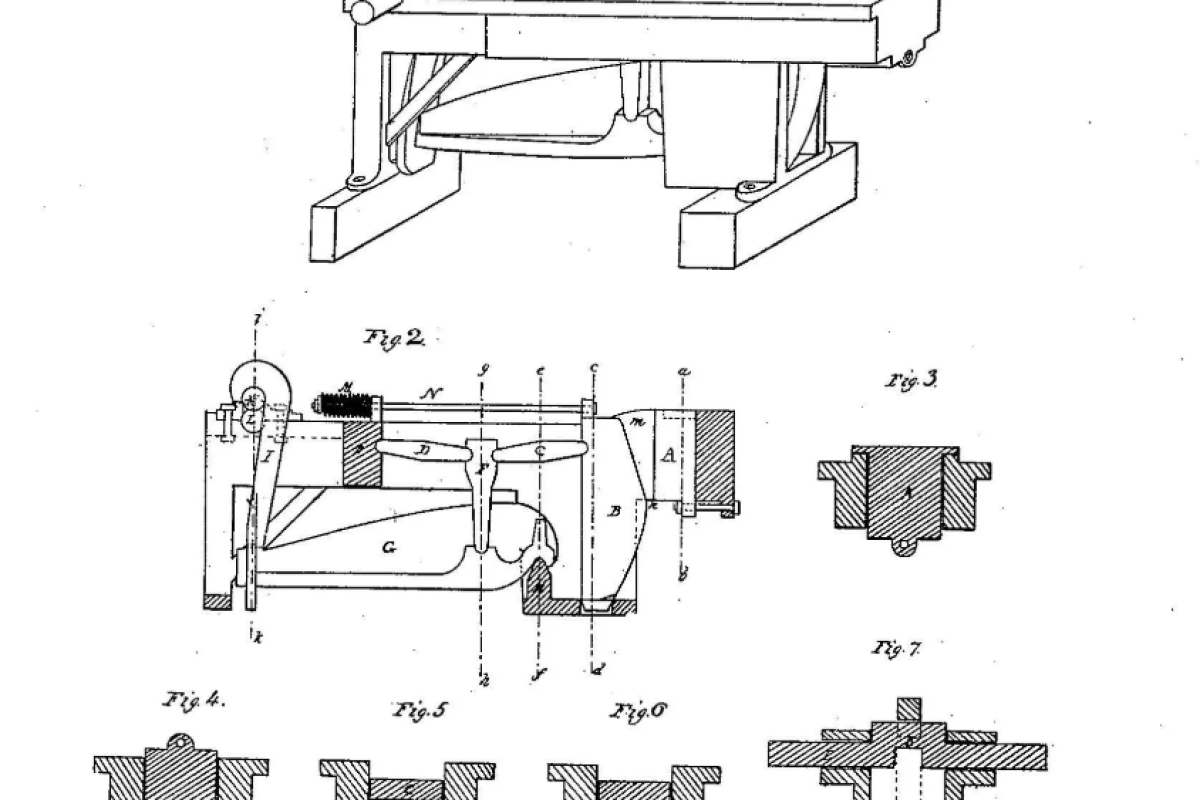
The history of jaw crushers begins in 1858, when American inventor Eli Whitney Blake was granted a patent for his design.
Blake’s invention, known as the Blake Jaw Crusher, still forms the foundation of modern crusher designs today.
It worked by using compression between a fixed jaw and a moving jaw.
First application: quarries and road construction projects — particularly in the United States, where it revolutionized road building.
Thanks to Blake’s invention, stone crushing shifted from manual labor and simple hammers to faster and far more efficient mechanical processes.
Early 20th Century: Industrial Expansion
With the Industrial Revolution, mining and construction projects accelerated.
The transition from steam engines to diesel motors made jaw crushers more powerful and portable.
During this period, a range of sizes and capacities was developed — from small laboratory crushers to large industrial quarry machines.
Jaw crushers became indispensable in gold, copper, and coal mining operations.
Mid-20th Century: Hydraulic Systems and Safety
After the 1950s, jaw crushers were enhanced through modern engineering innovations:
Hydraulic adjustment systems: made it easier to control the jaw opening.
Overload protection systems: reduced the risk of mechanical damage.
More durable jaw plates: with manganese steel and alloy materials for longer life.
Machines became safer, more durable, and easier to maintain during this era.
Late 20th Century: The Mobile Revolution
From the 1980s onward, flexibility and mobility became key priorities in the construction sector.
The most significant innovation of this period was the development of mobile crushing and screening plants.
Jaw crushers were now mounted on crawler or wheeled units, making them portable between job sites.
This mobility provided major time and cost savings, especially for large infrastructure projects.
As a result, jaw crushers began to play a vital role not only in quarrying but also in the recycling industry.
Today: Digitalization and Eco-Friendly Technologies
Modern jaw crushers are not only powerful but also smart and environmentally conscious:
Automation and sensor technologies: enable real-time monitoring of jaw wear, energy use, and efficiency.
Remote control and IoT integration: allow operators to manage machines via tablets or centralized systems.
Electric and hybrid crushers: reduce carbon emissions and operating costs.
Compact designs: make them ideal for use in urban construction projects.
The Future Outlook: Where Are We Headed?
In the coming years, the development of jaw crushers will focus on several key trends:
AI-powered maintenance: predicting and preventing failures.
Fully electric crushers: achieving zero-emission operation.
Lightweight yet durable materials: such as titanium alloys and composites.
Smart integration: managing the entire crushing and screening process from a single digital platform.
The Role of Jaw Crushers in Industry
Mining: primary crushing of hard and abrasive materials.
Construction: recycling of concrete, asphalt, and building waste.
Infrastructure projects: material preparation for roads, dams, and railways.
Recycling: reusing reinforced concrete and other materials.
Through these roles, jaw crushers have remained indispensable machines in industry — from the past to the present.
Mesco Global’s Contribution
The history of jaw crushers reflects the evolution of engineering innovation in the industrial world.
From Blake’s simple 1858 design to today’s digital, eco-friendly, and high-efficiency systems, the journey continues.
At Mesco Global, we provide both stationary and mobile jaw crusher solutions, offering the most efficient options for each project with customized capacity, power source, and design configurations.